
What Is Rotational Molding (Slush Casting)?
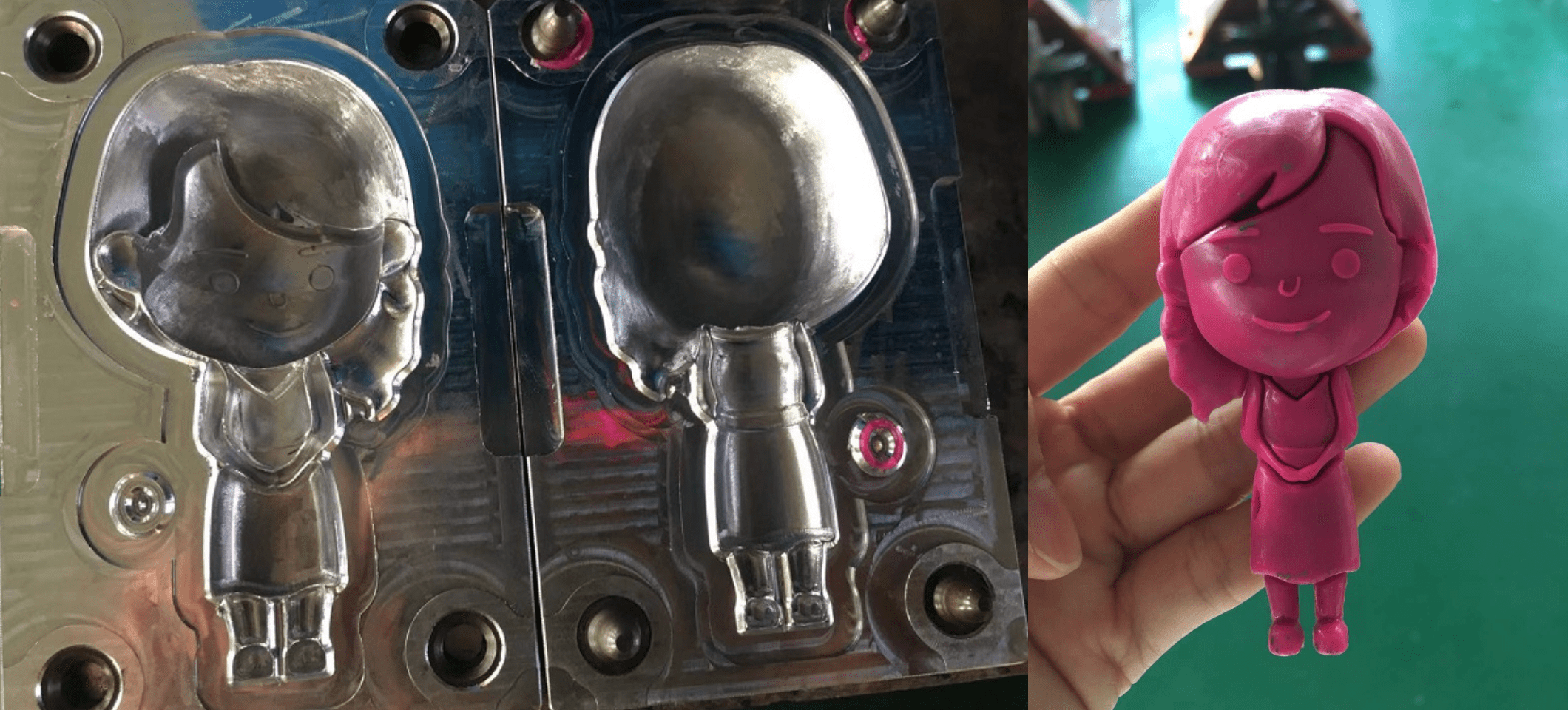
Rotational molding—commonly known in the toy and collectibles industry as slush casting—is a specialized manufacturing process used to produce seamless, hollow, one-piece vinyl products.
Unlike injection molding, which relies on high-pressure filling, slush casting uses controlled rotation and heat to evenly coat the inner surface of a mold. The result is a lightweight yet durable structure with exceptional surface integrity.
The origins of slush casting date back to 1924 in Germany, when the first rotational molding machine successfully produced a hollow toy famously referred to as the “Chocolate Bunny.” Since then, the process has evolved into a cornerstone technique for custom vinyl figures, designer toys, mascots, decorative objects, and light-weight display pieces.
Today, slush casting remains irreplaceable for products that demand complex shapes, seamless surfaces, and superior aesthetic fidelity.
How the Slush Casting Process Works
At its core, slush casting is built on a simple but highly controlled principle:
-
PVC liquid resin is poured into a precision mold

-
The mold is sealed (or left open, depending on technique)
-
The mold enters a heating oven and rotates on dual axes
-
Centrifugal force distributes the resin evenly along the mold walls
-
The resin gels, plastifies, cools, and forms a hollow shell
-
The product is demolded as a single, seamless piece
Because material thickness is governed by time, temperature, and rotation, the process allows for remarkable consistency without internal seams or stress points.
Why Slush Casting Is So Widely Used
1. Seamless One-Piece Construction
Slush casting eliminates joints, seams, and bonding lines. This significantly improves:
-
Structural integrity
-
Visual cleanliness
-
Long-term durability
Seam-related defects—common in assembled or welded products—are completely avoided.
2. Lightweight Hollow Structure
The hollow interior dramatically reduces weight without compromising form. This makes slush casting ideal for:
-
Vinyl toys and figures
-
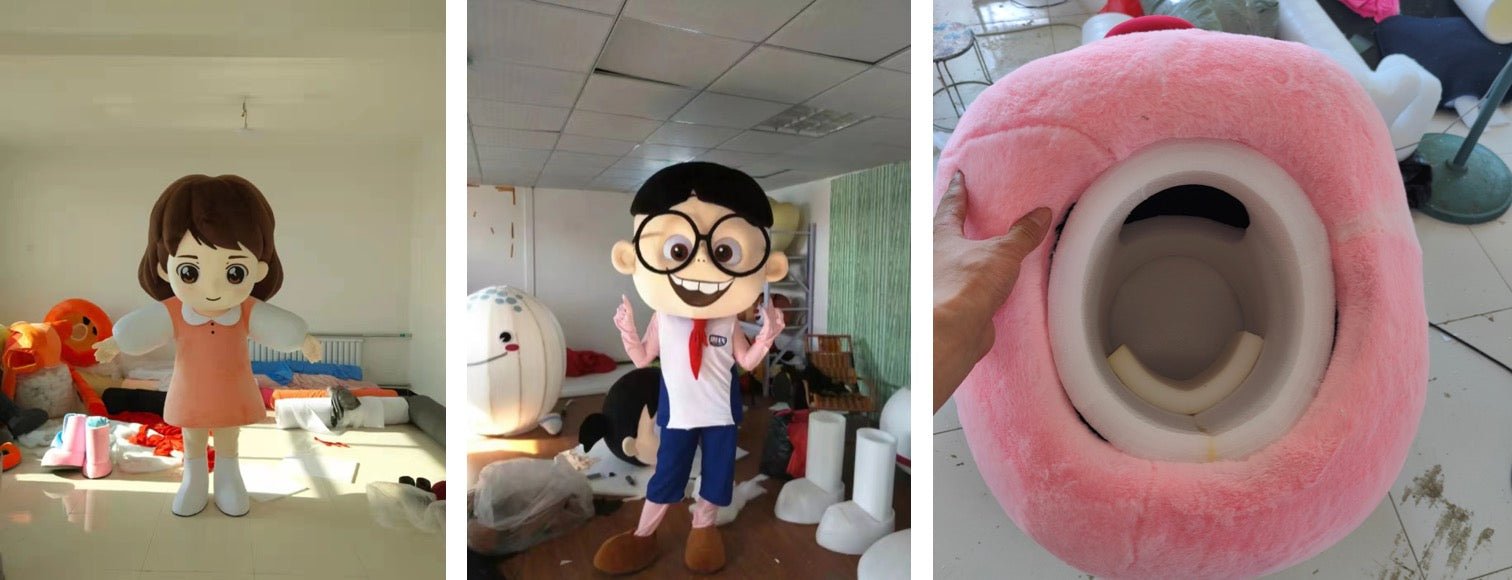
Mascot components
-
Decorative displays
-
Lightweight promotional items
3. Exceptional Freedom of Form
Curves, organic silhouettes, exaggerated proportions, and asymmetrical designs are all easily achievable. Slush casting adapts naturally to complex geometries that would be difficult or costly with injection molding.
4. Superior Surface Detail
Fine textures, sculpted lines, subtle contours, and graphic elements transfer cleanly from mold to product—enhancing both artistic and commercial value.
Standard Slush Casting vs. Oil Slush Casting
While both techniques rely on rotational molding, their process flow and mold structure differ significantly.
Standard Slush Casting Process
-
Resin injection
-
Mold sealing
-
Heating and plastification
-
Cooling
-
Mold opening
This streamlined workflow makes standard slush casting the most cost-efficient and versatile option for mass production of conventional vinyl products.
Oil Slush Casting Process
-
Measured resin injection
-
Initial heating and gelling
-
Excess resin drainage
-
Secondary heating
-
Cooling and demolding
This more complex sequence offers critical advantages for:
-
High-transparency products
-
Intricate internal structures
-
Premium surface finish with zero flow marks
As a result, oil slush casting is widely used in high-end designer figures and collectible-grade products.
Mold Design: The Hidden Differentiator
Standard Slush Molds
-
Fully enclosed, bolt-sealed molds
-
Lower tooling cost
-
Easier fabrication
However, for complex geometries, sealing and demolding can become challenging.
Oil Slush Molds
-
Open-mouth mold design
-
Optimized for resin drainage
-
Higher tooling precision
These molds significantly improve surface quality, especially for transparent or structurally complex designs.
Cost vs. Value: Choosing the Right Process
| Process Type | Core Strength | Cost Level |
|---|---|---|
| Standard Slush Casting | Versatility, scalability | Baseline |
| Oil Slush Casting | Transparency, complexity, surface perfection | ~1.6× standard |
Oil slush casting is not a replacement—it is a specialized upgrade, reserved for products where visual and structural excellence justify the premium.
Production Efficiency: The Multi-Plate Mold System

Standard slush casting typically uses a rotary plate system, where multiple molds are mounted on a single 24-inch mold plate and processed together.

Loading Guidelines
-
Product diameter 30–70 mm → 12 molds per plate
-
Product diameter 70–100 mm → 8 molds per plate
This configuration balances heat distribution, cycle time, and product consistency.
Why Each Component Requires Three Mold Plates
To achieve continuous, zero-idle production, each component requires three identical mold plates operating in rotation:
-
Plate A: inside the oven (forming)
-
Plate B: outside, applying resin
-
Plate C: cooling and demolding
This three-plate cycle ensures the oven is never idle, maximizing output and minimizing cost per unit.
Mixed-Plate Production: Rules and Risks
Only molds with similar size and wall thickness may share a plate. Mixing large and small parts leads to:
-
Overcured (“burned”) small parts
-
Undercured (“raw”) large parts
Uniform curing time is non-negotiable for quality consistency.
Oil Slush Casting: Flexible Mold Allocation

Oil slush casting does not follow fixed plate counts. Instead, mold quantity is calculated to:
-
Prevent oven downtime
-
Maintain uninterrupted workflow
Because oil slush ovens are expensive assets, maximizing utilization is the primary goal.

When Slush Casting Is the Best Choice
Slush casting is strongly recommended when:
-
A hollow structure is required
-
Order quantities are small to medium
-
Injection molding is impractical due to:
-
Difficult demolding
-
Excessive wall thickness
-
In many cases, slush casting becomes a strategic alternative rather than a compromise.
Value-Added Combinations: Beyond Vinyl Alone
Material Pairings

-
Slush-cast body + injection-molded parts
Soft-touch bodies combined with rigid, high-detail accessories -
Slush vinyl + fabric or electronics
Hybrid plush-vinyl toys, interactive figures, mascots
Functional Enhancements
-
Sound modules
-
LED lighting
-
Motion or interactive triggers
These features significantly increase engagement and perceived value.
Surface Finishing: Where Character Comes Alive
Every slush-cast product begins as a white blank and must undergo finishing:
Standard Finishes
-
Spray painting
-
Pad printing
Available effects:
-
Matte finish (premium, understated)
-
Gloss finish (vivid, eye-catching)
-
Specialty coatings (metallic, pearl, texture effects)
Advanced Treatments
-
Electroplating
-
Flocking
-
Hand painting
These techniques elevate products from merchandise to collectible-grade objects.
Tooling & Production Timeline
Mold Development (30–40 working days)
-
3D modeling: 5–7 days
-
Wax prototype: 5–7 days
-
Mold master approval: 7–10 days
-
Production mold fabrication: 10–15 days
Mass Production (3–4 weeks)
-
Slush molding: 7–15 days
-
Painting & printing: 7–10 days
-
Assembly & packaging: 5–7 days
Complex designs, special colors, or holiday schedules may extend timelines.
Final Thoughts: Why Slush Casting Still Matters
In an era dominated by automation and injection molding, slush casting remains a craft-driven, precision-oriented process.
It bridges engineering and artistry—offering designers freedom, brands differentiation, and products a distinctive tactile presence that mass-produced alternatives simply cannot replicate.
For hollow vinyl figures, mascots, and premium collectibles, slush casting is not just a manufacturing method—it is a statement of quality.