
Introduction: Why Materials Matter in Custom Plush Manufacturing
In custom plush toy manufacturing, materials are far more than a cost factor — they define the product’s texture, durability, appearance, safety, and overall perceived quality. Whether you are developing a brand mascot, a collectible plush, or a promotional toy, choosing the right fabric and filling is a critical design decision.
This guide breaks down the most commonly used plush toy fabrics and filling materials, explaining their characteristics, advantages, limitations, and ideal applications. It is designed to help brands, designers, and sourcing teams make informed decisions when developing custom plush products.
Part 1: Plush Toy Fabric Materials
1. Non-Woven Fabric (Nonwoven Fabric)

Non-woven fabric, also known as nonwoven material, is widely used in plush toy production as a structural support material rather than a surface fabric.
Key Characteristics:
-
High stiffness and shape retention
-
Cannot achieve ultra-soft textures
-
Excellent for internal structure and reinforcement
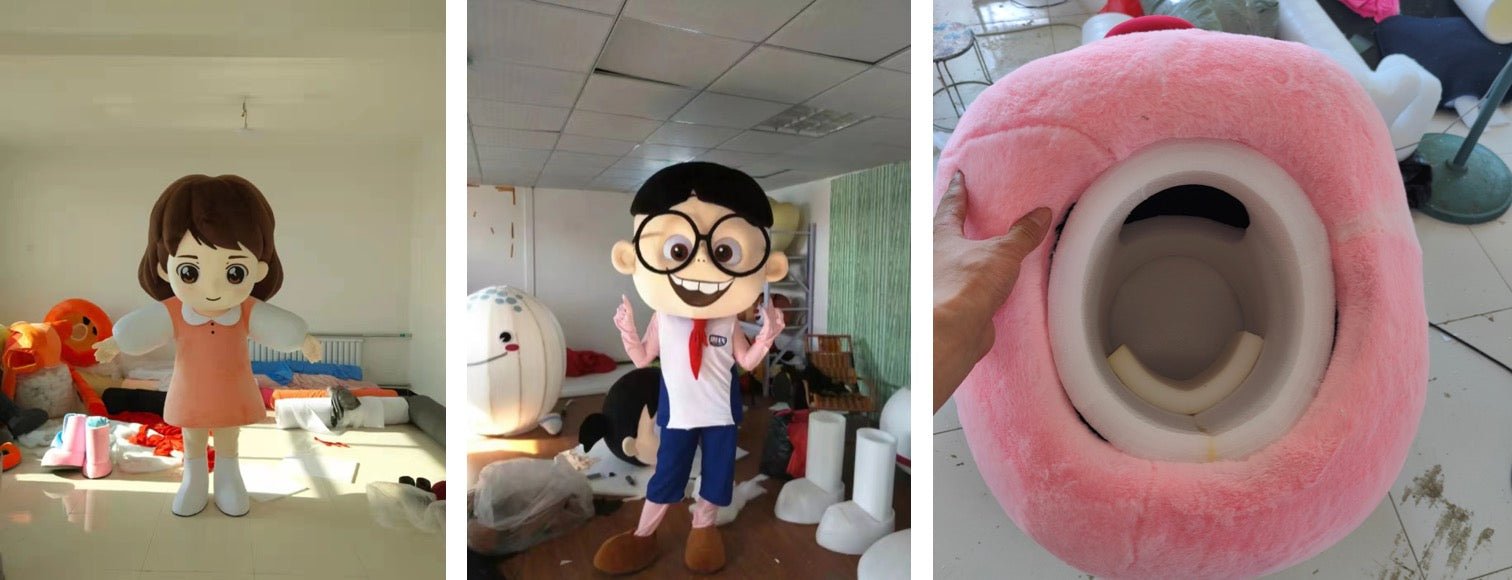
Because of its rigidity, non-woven fabric is commonly used to create elements that require defined shapes, such as hats, accessories, or internal frameworks. Many complex plush designs rely on non-woven fabric laminated with sponge foam to achieve sharp contours or stable silhouettes that soft plush fabrics alone cannot support.
2. Ultra-Soft Plush Fabric (Super Soft Plush)

Ultra-soft plush is one of the most widely used surface fabrics in plush toys. It is typically classified by pile height, ranging from 0.5mm to 8mm.
In the industry, pile height is often referred to as “毛高” (hair length). Post-processing techniques such as brushing, dyeing, and nap direction control are applied to enhance texture and visual depth.
Common Types of Ultra-Soft Plush:
-
Crystal Super Soft Plush
-
Imitation Fur
-
Yali Plush
-
Korean Plush (PV Plush / Long Pile Plush)
Among these, 1.5mm crystal super soft plush is currently the most popular material in the global market due to its balanced softness, durability, and cost efficiency.
Advantages:
-
Extremely soft and skin-friendly
-
Smooth, dense texture without prickly sensation
-
Ideal for toys that contact the face or skin
Limitations:
-
Not suitable for sharp edges or angular designs
-
Structural shaping requires additional materials
2.1 Crystal Super Soft Plush (1.5mm Pile Height)
This material offers a refined balance between softness and structure. It is commonly used for character plush toys and animal designs, especially when a clean, premium feel is required.
2.2 Imitation Fur Plush
Imitation fur is designed to replicate the look of real animal fur. It is often paired with 1.5mm crystal plush for the body, while imitation fur is used selectively to create realism.
This material is widely used in realistic animal plush toys.
2.3 Yali Plush (8mm Matte / Semi-Gloss)

Yali plush features longer pile heights and is available in matte or semi-gloss finishes. It creates a fuller, fluffier appearance and is commonly used for decorative or oversized plush designs.
2.4

Korean plush, also known as PV plush or long pile plush, is primarily made from polyester fibers. It is available in matte and semi-gloss variations.
Compared to Yali plush, Korean plush has thicker fibers, resulting in a slightly firmer hand feel while maintaining softness and strong visual appeal.
3. Sherpa / Lamb Fleece (Shearling-Style Fabric)

“Lamb fleece” is a commercial term rather than a standardized textile classification. It generally refers to ultra-fine wool-like fabrics, positioned between cashmere and standard wool.
In plush toy production, manufacturers typically use synthetic lamb fleece, composed mainly of polyester and acrylic fibers.
Why It’s Used:
-
Soft, warm appearance
-
Ideal for cozy or winter-themed plush toys
-
Consistent quality and easy maintenance
Natural wool versions exist but are rarely used due to cost, maintenance challenges, and export compliance considerations.
4. Stretch Super Soft Plush

Stretch plush fabric features high elasticity and is often paired with down cotton or foam bead fillings.
Advantages:
-
Excellent flexibility
-
Smooth surface finish
Limitations:
-
Not suitable for complex or rigid shapes
-
Best for simple silhouettes
5. Nylex / Tricot Fabric
Nylex fabric, also known as Tricot, is available in polyester and nylon variants. Polyester Nylex is the most commonly used type in plush manufacturing.
Applications:
-
Printed or embroidered plush surfaces
-
Clothing and internal linings
-
Functional accessories
For screen printing, pile height must be carefully controlled (typically under 1mm) to ensure proper ink adhesion and color durability.
Part 2: Plush Toy Filling Materials
1. PP Cotton (Polypropylene Fiber Filling)

PP cotton is the most widely used plush toy filling material. It is lightweight, resilient, washable, and quick-drying.
Key Advantages:
-
Excellent elasticity and rebound
-
Resistant to deformation
-
Easy to clean and maintain
Classification:
-
2D PP Cotton: Basic structure, lower rebound
-
3D PP Cotton: Hollow fiber, superior elasticity
PP cotton is also classified by fiber length and denier (D), with 7D/A-grade being the most commonly used for export-quality plush toys.
2. Foam Beads (EPS Beads)

Foam beads, also known as snow beads, are polymer-based filling materials known for their fluidity and temperature adaptability.
Characteristics:
-
Lightweight and breathable
-
Excellent for cushions, pillows, and bean bags
-
Higher cost compared to PP cotton
International clients often prefer foam beads for premium comfort products.
3. Down Cotton (Hollow Fiber Filling)

Despite the name, down cotton does not contain natural down. It is made from hollow polyester fibers that trap air, providing insulation and softness.
Advantages:
-
Lightweight and warm
-
Smooth hand feel
-
Maintains shape over time
This filling is increasingly used in plush toys, cushions, and plush blankets.
4. Sand, Plastic Pellets, and Glass Beads
These heavy fillings are used sparingly for weighted sections or mini plush toys.
Due to their weight, they are unsuitable for large plush products but can enhance stability or tactile feedback in small areas.
Conclusion: Choosing the Right Material for Your Plush Design
Every plush toy begins with a design vision — and that vision is realized through material choices. From ultra-soft fabrics to structural reinforcements and specialized fillings, understanding material properties allows you to balance comfort, aesthetics, durability, safety, and cost.
In custom plush manufacturing, the right material combination is what transforms a design into a product that customers love — and remember.
Mandatory Testing for Related Materials & Components
To ensure full compliance with international safety standards, the following materials and components are subject to mandatory testing:
-
Threads: Colorfastness testing, tensile strength testing (as required), Japan hygiene compliance testing.
-
Fabrics: Dry/wet rub testing (for dyed fabrics), tensile strength testing, flammability testing.
-
Plush Toys (Finished Structure): Torque, tensile, compression, bite force, and drop testing; additional testing based on client requirements or EU/US standards.
-
Heat Transfers: Label displacement testing, adhesion testing.
-
Ribbons: Tensile testing, colorfastness testing, flammability testing, Japan hygiene testing.
-
Hook & Loop (Velcro): Functional and lifecycle testing.
-
Eyes & Nose Accessories: Hanging load testing, tensile testing.
-
Screen Printing: Dry/wet rub testing, oil resistance testing.
-
Cords & Straps: Tensile strength testing.
-
Cartons: Oil rub testing, static compression testing.
-
Poly Bags: Thickness testing, adhesion testing, oil rub testing.
-
Instruction Manuals: Oil rub testing.
-
Color Boxes: Oil rub testing, aging testing, crush testing (for window areas).
-
Hangtags: Oil rub testing.
-
Stickers: Label displacement testing, oil rub testing, cross-hatch adhesion testing.
-
Metal Parts: Salt spray (corrosion) testing, sharp point and sharp edge inspection.
-
Electronic Components: Functional, lifecycle, noise, frequency, current, and voltage testing.
-
Battery Compartments: Short-circuit testing, temperature rise testing, reverse installation testing.
-
Wires: Salt spray testing, bend testing, sharp edge inspection.
-
Plated / Mirror Coatings: Oil resistance testing.
-
Sound Modules: Functional, lifecycle, drop, and decibel (dB) testing.
-
Plastic Components: Torque, tensile, bite, and compression testing (as applicable); vinyl maturity and hardness testing; soft plastic hardness testing; flammability testing (as required); drop testing.
-
Blister Packaging: Aging and freeze testing; compression testing where applicable.
-
Woven Labels: Aging testing, dry/wet rub testing, tensile testing.
-
Foam: Hardness testing, anti-yellowing testing.
-
Gearboxes: Functional, lifecycle, and drop testing (as required).
-
Pad Printing / Spray Coating / Hot Stamping Parts: Oil rub testing, cross-hatch testing, sand abrasion testing, freeze testing, aging testing.
-
Finished Products: Simulated transportation testing.
-
Exposed Fabric Edges (If Applicable): Fabric edge strength testing.
-
Small Bean-Filled Plush Toys: Choking hazard testing.
-
Hybrid Material Toys (e.g., Vinyl + Fabric): Color migration testing.